
A shortlist of the right agencies
How to find and investigate agencies that are a good fit for your skills and likely to send consistent work.
Agency Partnership Playbook
Find agencies worth working with, test them before you commit, and build relationships that send you steady, profitable work, without letting one partner control your income, your calendar, or your rates.

$99.00
one-time
A guide and fill-in workbooks you use on real agency relationships.
Covered by Developer Business Lab's 14-Day Satisfaction Guarantee.
Agency work looks like the answer to feast or famine. Someone else finds the clients, and you just build.
Then the fine print shows up. Unpaid time estimating projects that never happen. Rush requests on Friday afternoon. Their client's "small changes" landing on your plate. A rate that looked fine until you counted all the hours around the work. And slowly, one agency becomes most of your income.
Now you're not just a contractor. You're dependent. And you try not to think about what happens if they stop calling.
An agency offers you a 40-hour build at $60 an hour. That's $2,400, and it looks like solid, easy work.
Here's what actually happened:
That's 59 hours for $2,400, or about $41 an hour, paid six weeks late. And because this agency now sends you 70% of your work, you didn't feel like you could push back on any of it.
None of that means agency work is bad. It means you need to measure it before you depend on it.
Illustrative example. Your numbers will vary.
Every agency tracks its subcontractors: who delivers on time, who's easy to work with, who costs the least for the quality. They keep options open so no single developer holds too much power over them.
Smart independent developers do the same. They qualify agencies before committing, measure what each partnership actually earns them, and never let one partner control too much of their income. This playbook shows you how.
How to find and investigate agencies that are a good fit for your skills and likely to send consistent work.
How to tell early whether an agency respects contractors, pays fairly and on time, and has real demand.
How to test a new relationship with a real, paid project before giving it your reserved capacity.
How to measure what each agency relationship actually earns you once meetings, estimates, revisions, rush work, and payment delays are counted.
How to set boundaries on rates, revisions, changes, and payment terms without damaging the relationship.
How to judge whether an agency's work is steady enough to plan around.
How to keep any single agency from taking over your calendar or your income.
How to decide, based on evidence, which partnerships deserve more of your time and which should stay small or end.
Agency work becomes a reliable source of income, not a risk you worry about.
You know exactly what each partnership pays once all the hidden hours are counted.
You can push back on rush requests, unpaid estimates, and scope creep without fear.
No single agency controls your income.
And you choose which partnerships to grow, instead of letting them grow around you.
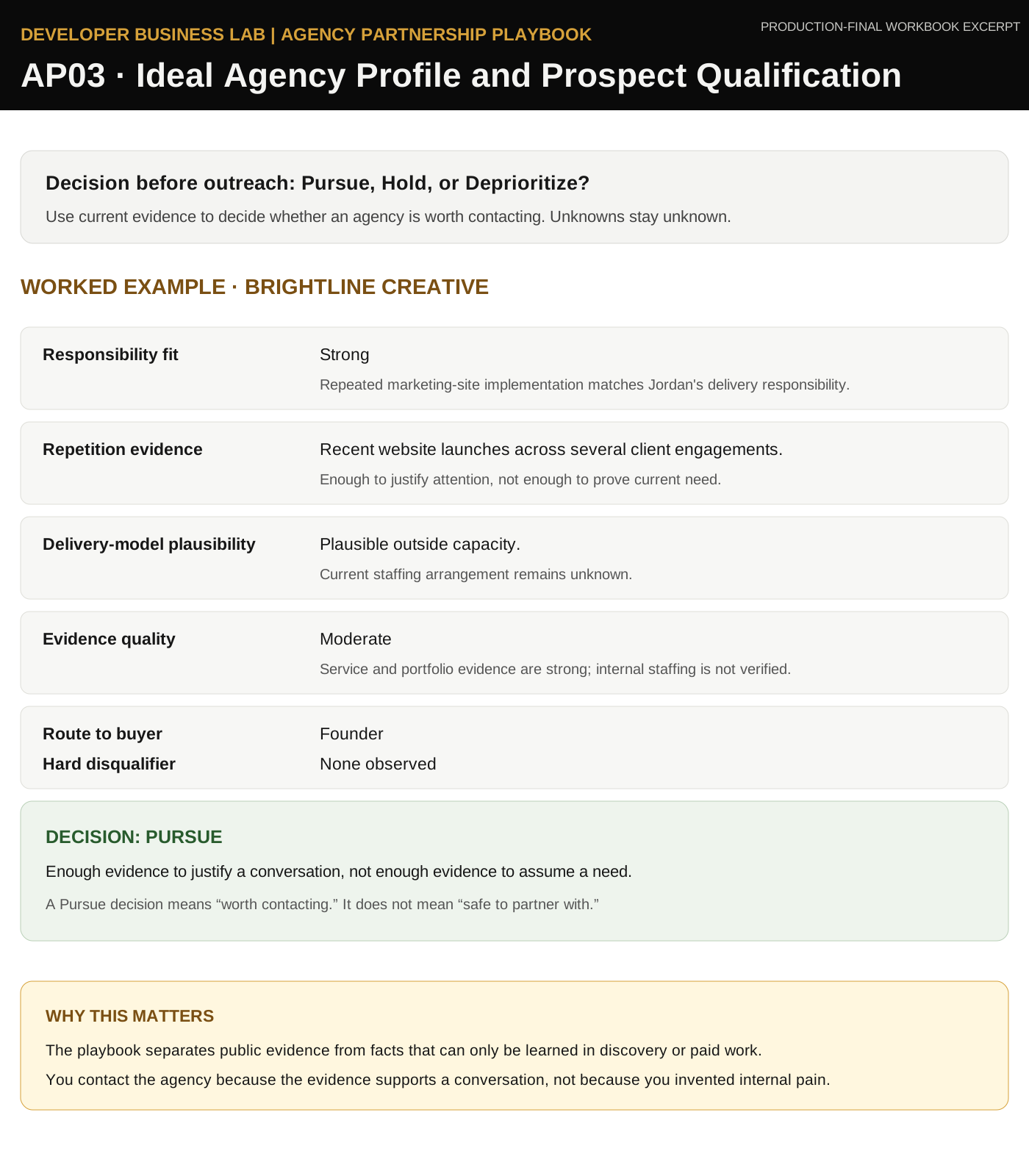
Workbook AP03 · Prospect qualification
AP03 keeps public evidence separate from unknown operating facts. Brightline is worth contacting because the evidence supports a conversation, not because Jordan has assumed an internal need.
Open full-size preview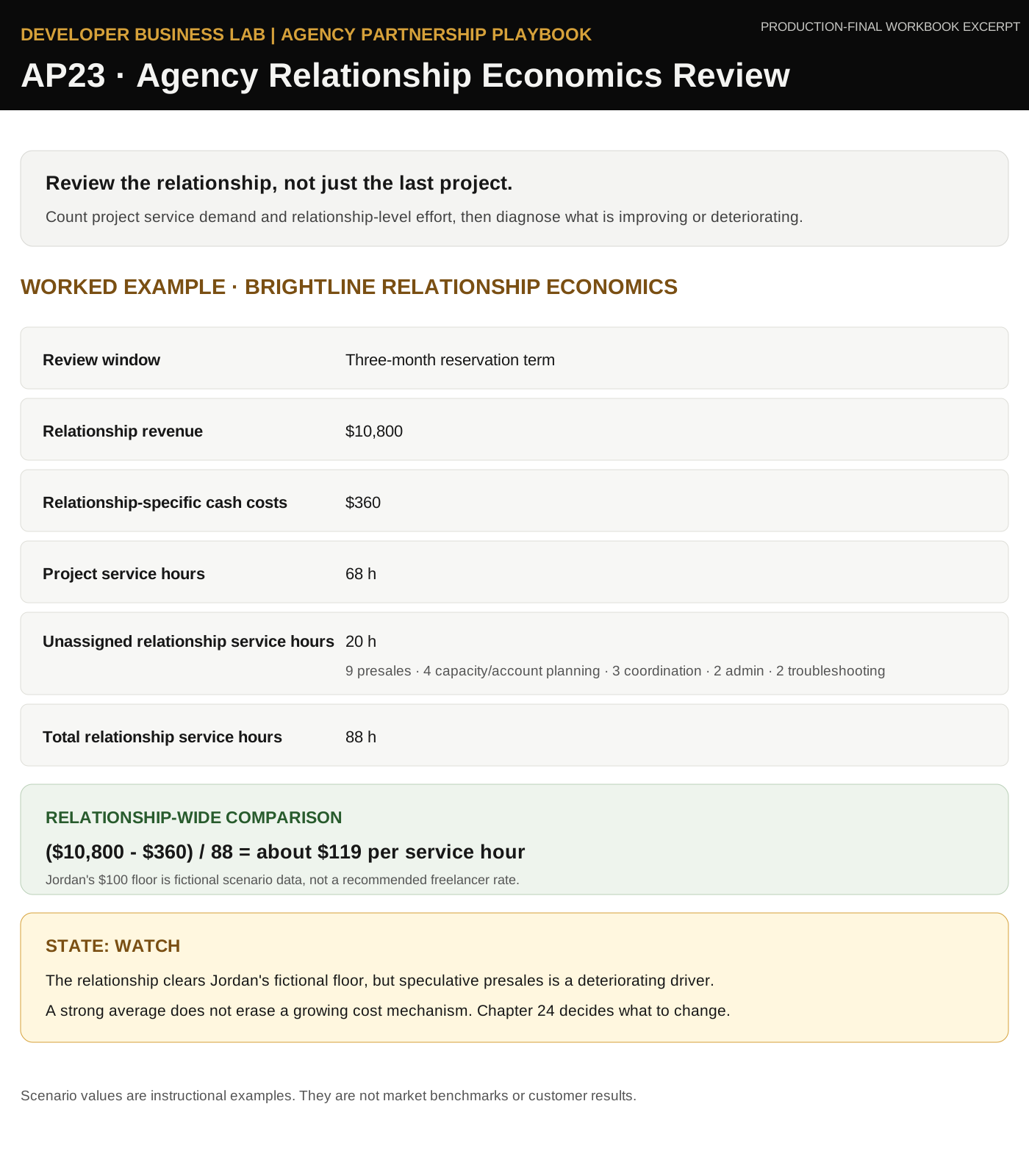
Workbook AP23 · Relationship economics
AP23 rolls project hours and unassigned relationship effort into one review period, then diagnoses the driver instead of letting one profitability number hide growing presales cost.
Open full-size preview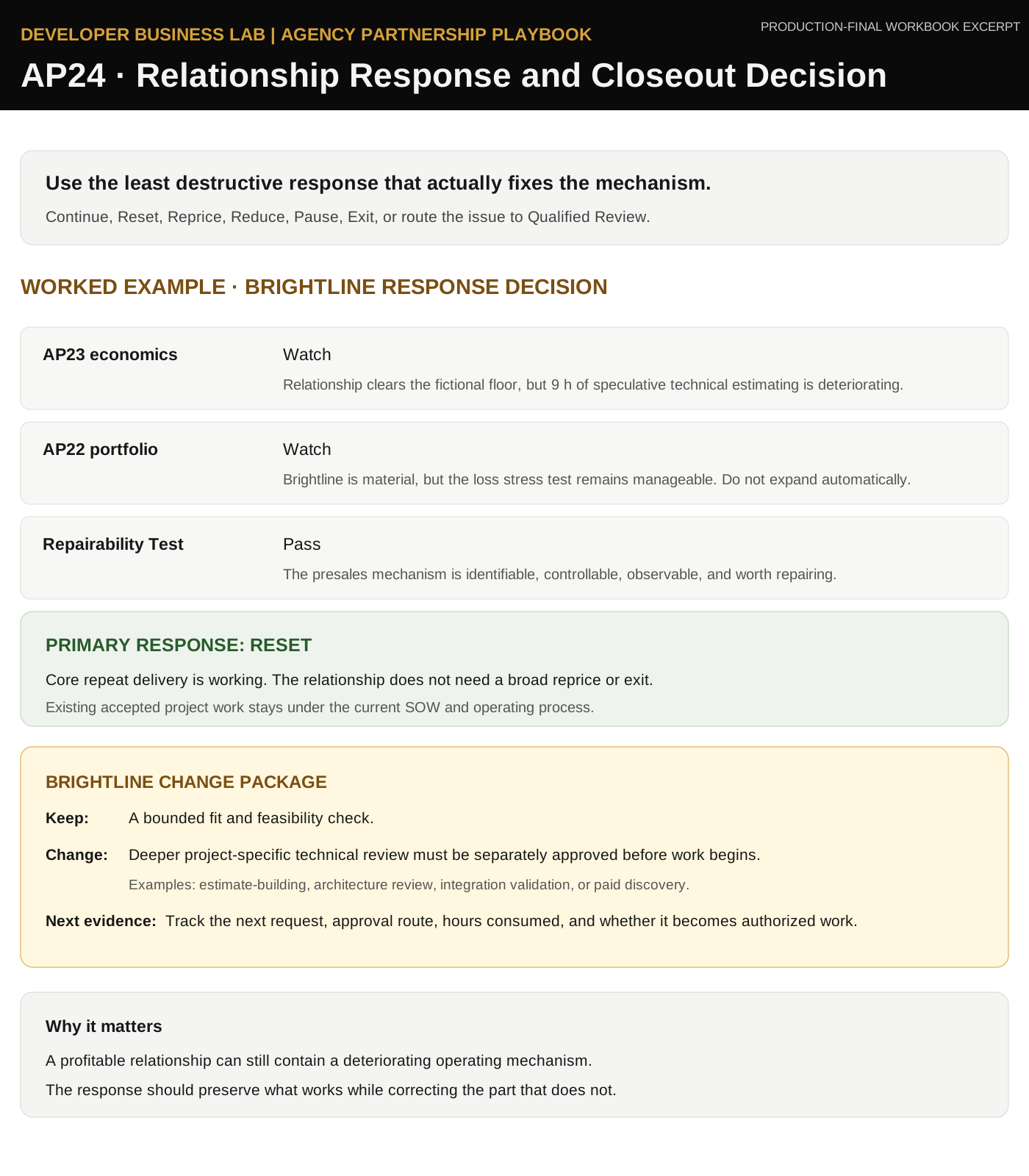
Workbook AP24 · Relationship response
AP24 uses the least destructive response that fixes the mechanism. Brightline stays valuable, so the answer is a presales reset rather than an automatic price increase or exit.
Open full-size previewYou'll use these every time you consider a new agency and whenever you review an existing one.
Already have the Launch Kit? It covers acquisition at a foundational level. This goes deep on agencies as a specific channel, for when you want partnerships to become a dependable part of your business. See the Launch Kit.
Building your own pipeline too? Client Acquisition Without Upwork builds your direct pipeline. Agency partnerships add a second route, so you're never depending on just one.
Still unsure about your rates? Pair this with the Web Developer Pricing System, so you know what agency work needs to pay before you agree to it.
Agency work can quietly pay far less than its rate suggests. If this playbook helps you catch one underpaying relationship, negotiate one fairer rate, or avoid one bad partnership, it has paid for itself many times over.
$99.00, one-time
Yes. It covers how to find, investigate, and qualify agencies from the start, so your first partnerships are good ones.
Possibly not for that relationship. But if one agency is a large share of your income, this will help you measure what it really pays and protect yourself if things change.
Handled well, it usually earns more respect. Clear, professional boundaries on scope and payment are normal for good agencies. The ones that won't accept them are worth knowing about early.
Yes. It applies whether you work under the agency's name or your own. The playbook covers commercial authority, direct-client questions, portfolio and confidentiality considerations, scope authority, and communication paths so the agency's client relationship stays clear without making your responsibilities vague.
Use the system against real agency opportunities and active relationships rather than treating it like a course you must finish first. The playbook includes a 231-page guide with 25 chapters and a 126-page workbook with AP01 through AP25. Chapter 25 gives you a 30-day management cycle for the channel; that is a review and operating window, not a promise that an agency will reply, run a pilot, or close within 30 days.
Eligible purchases are covered by Developer Business Lab's 14-Day Satisfaction Guarantee. After reviewing the product, if you decide it isn't useful for your business, you may request a refund within 14 days of purchase.
Build partnerships that send you steady, profitable work, while your business stays yours.
$99.00, one-time