
A full picture of the work
Everything a project actually obligates you to do: planning, communication, revisions, coordination, QA, launch, admin, and the costs that come with them. Not just the development hours.
Web Developer Pricing System
Know what a project will really cost you, whether it's worth taking, and what price and payment terms make sense, before you send the quote. Every price becomes a decision you can stand behind instead of a number you hope works out.

$59.00
one-time
A guide and fill-in workbooks you use on real quotes.
Covered by Developer Business Lab's 14-Day Satisfaction Guarantee.
A lead comes in. You estimate the coding hours, multiply by a rate you picked up somewhere, then knock a little off because you don't want to lose the deal. You send it and spend the night wondering if it was too high.
Then the project happens. The calls, the revisions, the content the client was supposed to send three weeks ago, the “quick” integration that wasn't. By the end, you've worked twice the hours for the same money.
The problem isn't your rate. It's that the quote only priced the code, and the project was much more than code.
The usual quote
Northstar Heating & Air needs a website. Jordan's first instinct is roughly $6,000. It's a plausible number, but the work underneath it hasn't been fully defined yet.
The same project, priced as a business decision
More importantly, the price now comes after the engagement, workload, uncertainty, internal economics, and commercial structure have been worked through. Jordan knows why the project is worth taking before the quote goes out.
Illustrative example from the product's fictional Northstar case. Your numbers will vary.
When an agency quotes a project, the estimate includes project management, meetings, revisions, QA, contingency for unknowns, and their overhead. They take deposits, bill by milestone, and charge for changes. That's a big part of why they can bill your work at a large markup and still stay in business.
Freelancers usually skip every one of those steps, then absorb the cost themselves. The Pricing System brings that same discipline to a one-person business, without the agency bureaucracy.
Everything a project actually obligates you to do: planning, communication, revisions, coordination, QA, launch, admin, and the costs that come with them. Not just the development hours.
What your client work needs to support: your income, taxes, tools, slow periods, and the time you can't bill. So you know the floor below which a project loses money.
How to spot the parts of a project that could blow up your hours, and how to price, scope, or phase them instead of silently eating the risk.
When fixed price makes sense, when hourly or phased pricing is safer, and when to charge for discovery before quoting the build.
Assumptions, boundaries, deposits, and milestones built into every quote, so the price you agreed to is the price you actually earn.
A deliberate decision on whether a project is worth taking at all, and what it would need to look like to become worth it.
You quote with confidence and sleep fine afterward.
You raise your prices with a reason you can explain, not just a feeling.
Projects stop quietly turning into unpaid overtime.
You stop discounting out of fear, because you know exactly what a lower price would cost you.
You can turn down a bad project calmly, or reshape it into one that works.
And your prices support doing the work right, instead of forcing you to cut corners to break even.
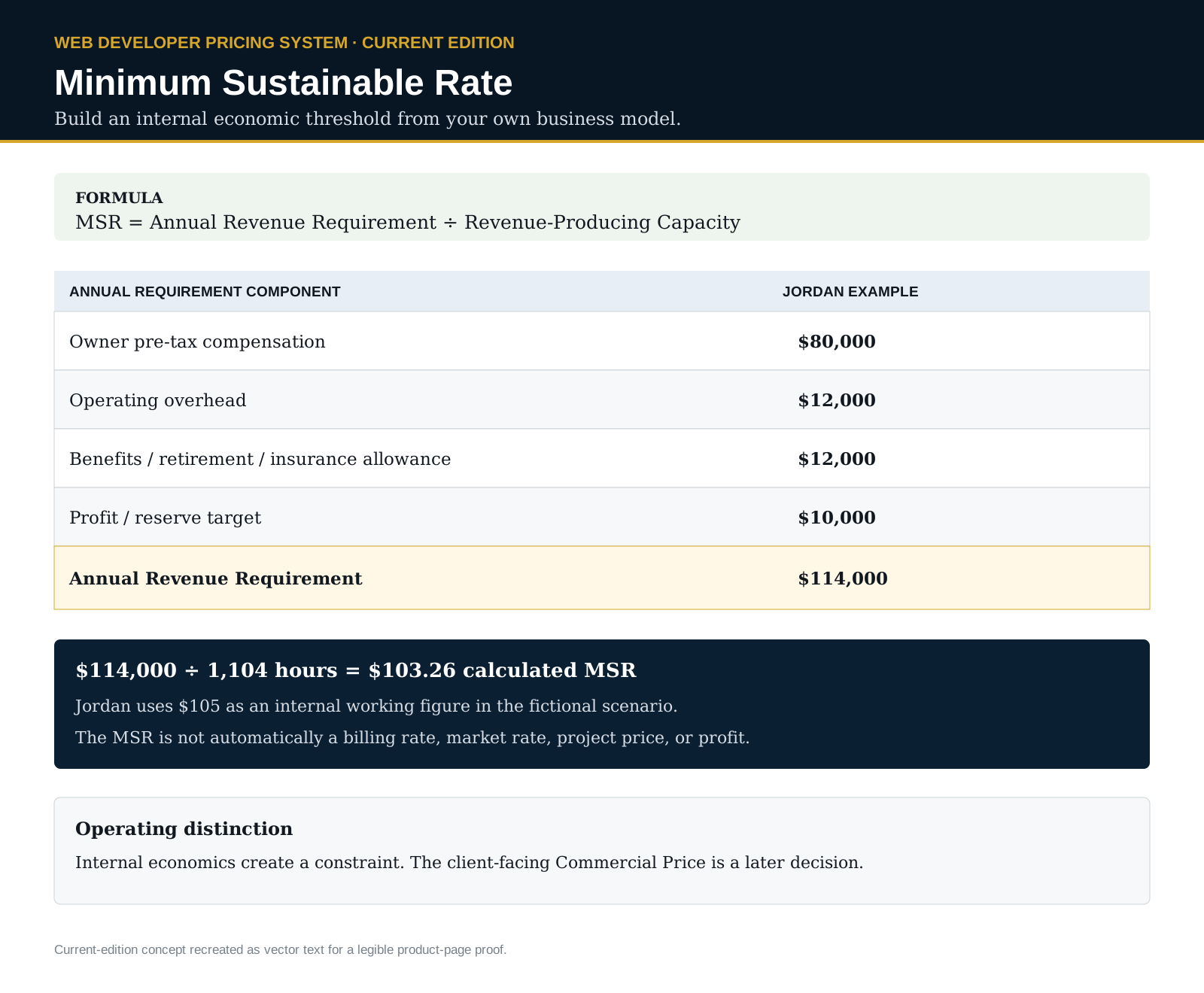
Business economics and capacity
Before a client-facing price is chosen, the system establishes what the business itself needs from paid work. The fictional Jordan example turns a $114,000 Annual Revenue Requirement and 1,104 revenue-producing hours into a $103.26 calculated Minimum Sustainable Rate and a $105 internal working figure.
Open full-size preview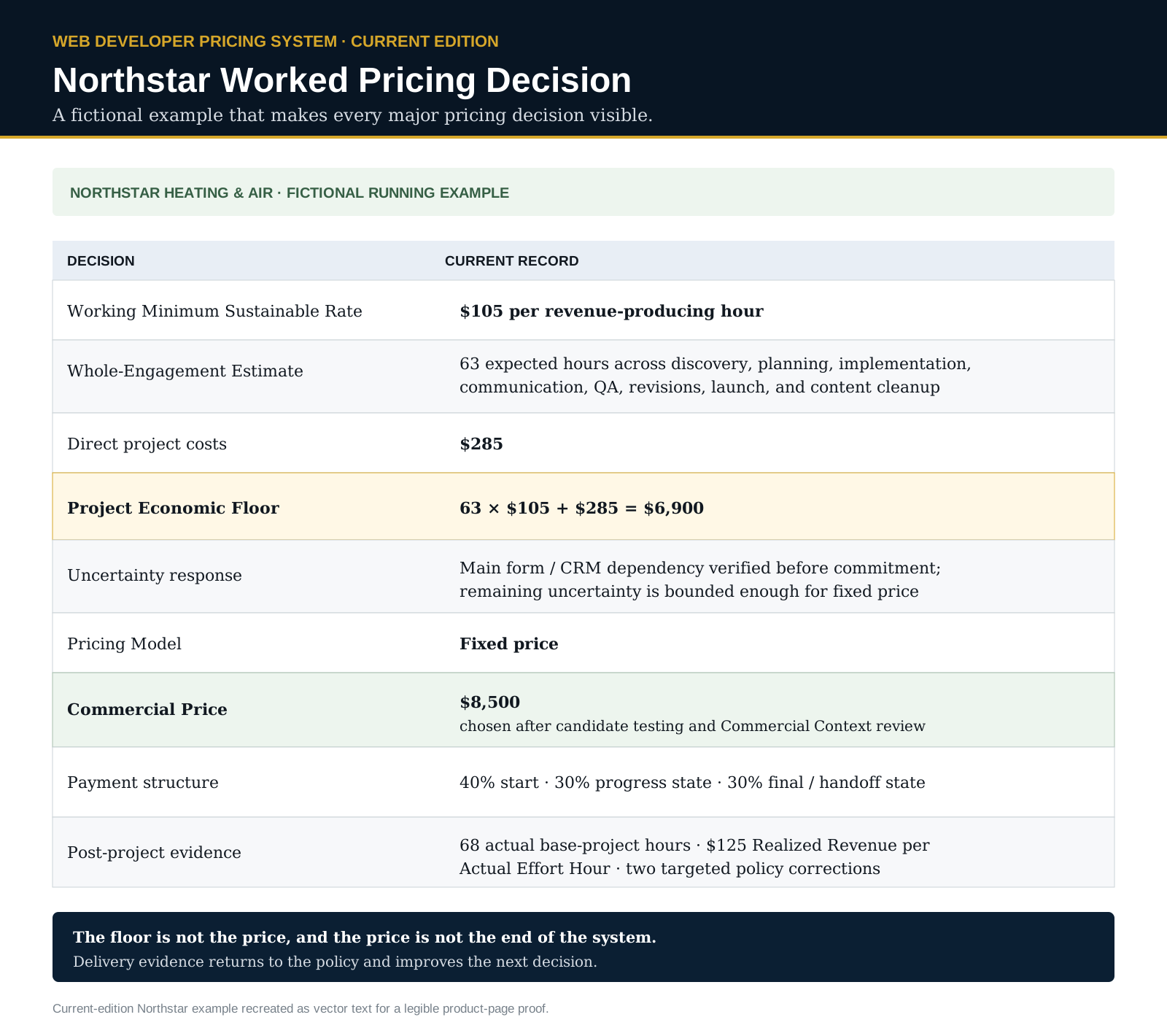
One project from estimate to commercial price
Northstar carries a fictional website engagement through scope, a 63-hour whole-engagement estimate, $285 in direct costs, uncertainty treatment, a $6,900 Project Economic Floor, and an $8,500 Commercial Price. What matters is the decision chain, not the example price.
Open full-size preview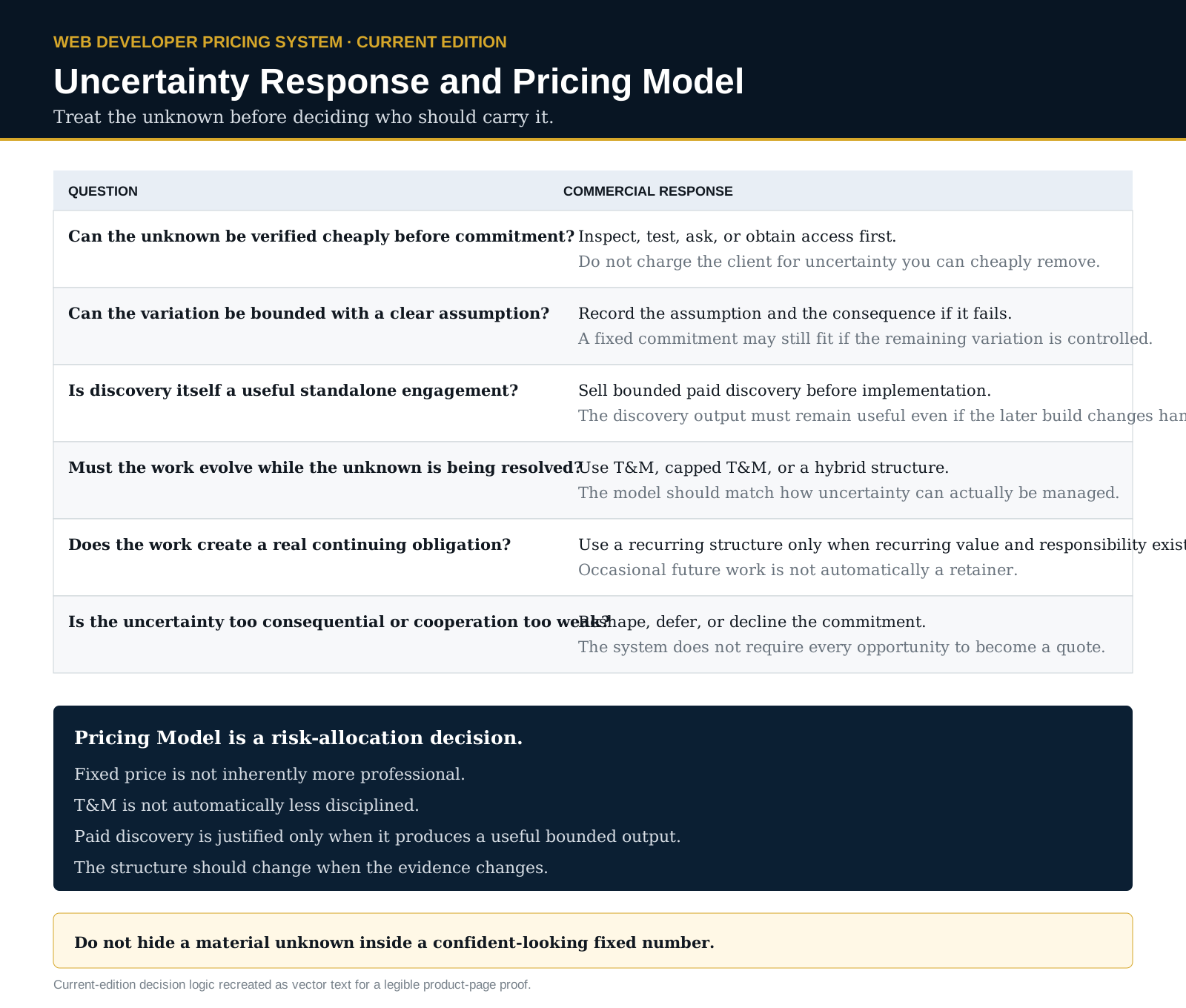
When uncertainty changes the deal
Unknowns are handled before a confident-looking fixed commitment is made. The worksheet shows how uncertainty can lead to verification, narrower scope, paid discovery, T&M, capped T&M, a hybrid structure, or a decision to reshape the engagement.
Open full-size previewYou'll use the workbooks on every quote you send, not just once.
Already have the Launch Kit? It covers pricing at a foundational level. This goes much deeper, for when your business review shows pricing is where the money is leaking.
Not sure what you're selling yet? Pricing works best on a clear offer. If your service still changes from client to client, pair this with Productize Your Dev Skills, or start with the Launch Kit to build every part of the business together.
Most freelance developers underprice by far more than the cost of this system on a single project. If it helps you catch one project's hidden hours, add one paid discovery phase, or stop one unnecessary discount, it has paid for itself.
$59.00, one-time
It shows you what a project needs to be worth taking. If the budget doesn't cover it, you can reduce the scope, phase the work, or decline, instead of quietly absorbing the difference.
Some, usually the ones who would have cost you the most. Clear scope, clear assumptions, and a price you can explain make higher numbers much easier for good clients to accept.
It depends on the project, and that's exactly what the system helps you decide. Each model fits different levels of risk and certainty.
It's more practical than that. It starts with what the work actually costs you and what it needs to support, then helps you make a deliberate pricing decision. There's no magic formula and no promise of a ‘correct’ price.
It uses simple numbers you already have: your hours, costs, and income goals. If you can estimate a build, you can do this.
Establish your business economics and capacity first, then take one real project or active opportunity through the pricing process. After that, the Personal Pricing Policy and Master Project Pricing Worksheet are designed to be reused on future quotes.
Eligible purchases are covered by Developer Business Lab's 14-Day Satisfaction Guarantee. After reviewing the product, if you decide it isn't useful for your business, you may request a refund within 14 days of purchase.
Know what the work costs, what it's worth to you, and whether to take it, before the client ever sees a number.
$59.00, one-time