
Pick one kind of business you can reach.
Not "small businesses" in general. A specific type you can find, contact, and understand.
Free guide and workbook for freelance developers
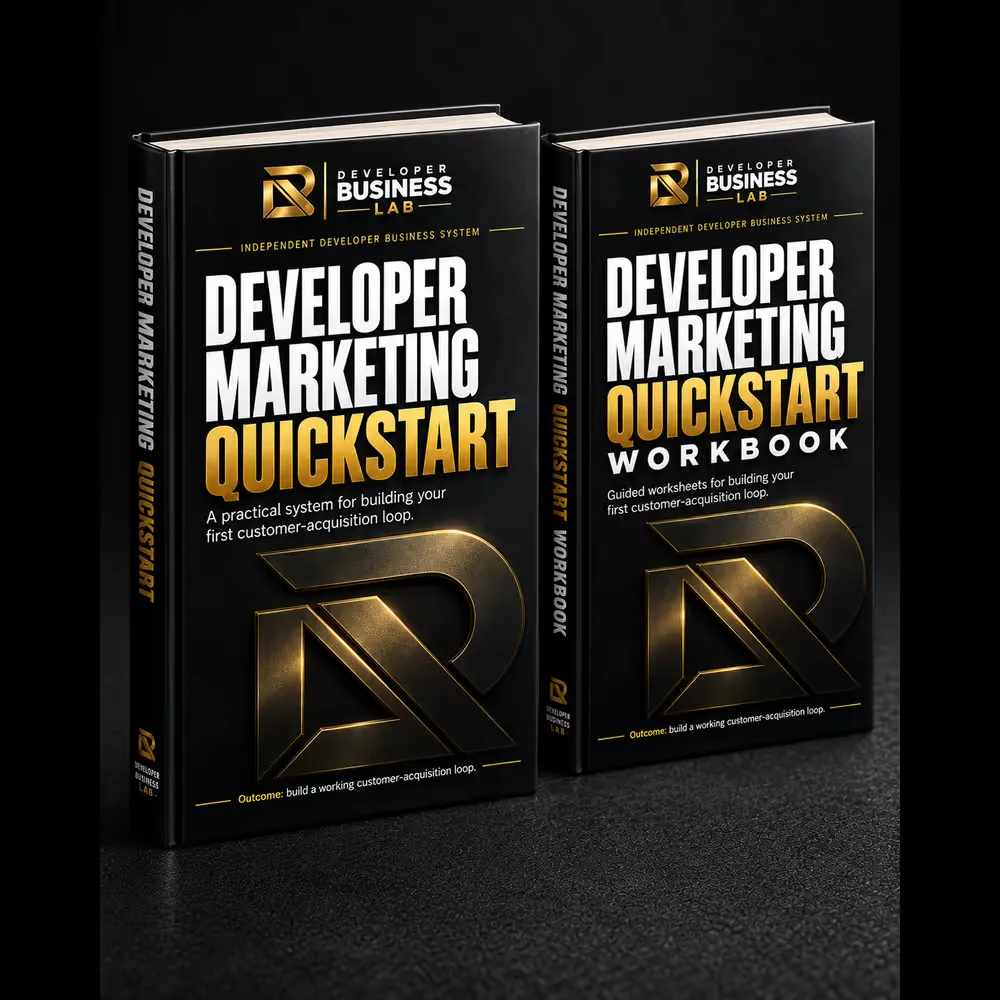
You already know how to do the work. The Developer Marketing Quickstart shows you how to create opportunities to get paid for it: choose one buyer, find a problem worth solving, shape an offer, build your First 25, and put it in front of real businesses. In seven days, you'll have your first client-acquisition cycle in motion and real market feedback instead of guesses.
Your clients come from referrals, a platform, or an agency. When they send work, you're busy. When they don't, you wait.
You've told yourself you'll start finding clients once the portfolio is done. It's been almost done for a while.
You've written cold emails in your head. Every one sounded like spam, so none of them got sent.
A project starts winding down and the math starts running in your head. What's coming in next month? Who replaces this client? How long can I afford an empty calendar?
You'd never spend three months on a feature without shipping a test version. Finding clients works the same way.
You don't need the perfect niche, website, or pitch before you start. You need a small version you can put in front of people, and their response tells you what to change.
You don't need to become a salesperson. You need to know who you're contacting, why they might care, and what you're asking them to do next.
What you'll do
Not "small businesses" in general. A specific type you can find, contact, and understand.
Something they'd pay to fix, so the conversation starts with their business instead of your tech stack.
A first version of what you'd sell. Clear enough to test; it doesn't need to be final.
A short list of businesses that actually fit, so you're not messaging strangers at random.
Send messages built around the problem you've investigated, then log every reply, question, and no.
Adjust the buyer, the problem, or the offer based on what happened, not on guesses.
The 64-page guide walks you through each step, from choosing a buyer to reading the results of your first outreach cycle.
The 45-page workbook is where you make every decision as you go: your buyer, their problem, your offer, your First 25 prospects, what happened when you reached out, and what you'll change next. When you finish, it becomes the working record for round two.
By the end, you'll have chosen a market, built an offer, identified 25 real prospects, contacted them, and collected actual market feedback instead of guessing what might work.
This is the client-acquisition starting point. It doesn't try to teach the entire freelance business. The goal is simpler: help you stop waiting for work and run your first deliberate attempt to find it.
No. Choosing who to reach is step one, and the process works with the useful work you've already done.
Probably more than most. Cold outreach feels bad when it's generic. Here, every message starts with a specific business and a problem you've actually investigated, so you're not sending the same pitch to strangers.
The Quickstart uses a seven-day activation plan to get your first client-acquisition cycle into motion. Seven days is not a promise that a client will appear within a week; it's a structure for choosing the buyer, building the offer and First 25, making real market contact, and knowing what to do next.
It's the first step in the Developer Business Lab system. It lets you use the approach before deciding whether you need the deeper paid systems for pricing, sales, delivery, and growth.
Lemon Squeezy handles delivery and emails you the download link after checkout. The product price is $0.
Build your First 25. Put your offer in front of real buyers. Give yourself a way to create opportunities instead of waiting for them.
Free. Enter your email on the next screen and it's yours.