Skip to content
Developer Business Lab
Menu

Freelancer Retainer System

Keep more good client revenue going after the project ends without giving away control of your calendar.

Diagnose a genuine continuing client need, define the recurring responsibility, price the full obligation, protect capacity, operate the month, and renew or reshape the relationship from evidence.

Best for

Independent developers and freelancers who have completed good client work and want to turn legitimate ongoing demand into recurring revenue without surrendering control of the calendar.

Freelancer Retainer System product mockup

$89.00

one-time

168-page implementation guide + 138-page companion workbook

Covered by Developer Business Lab's 14-Day Satisfaction Guarantee.

Continuity without surrendering capacity

A successful project can create another useful commercial relationship.

You want part of next month's revenue to come from value already being created without turning a good client into unlimited access to your time.

Recurring revenue can become a new source of resentment when the service has weak boundaries, hidden response obligations, poor economics, or a client who quietly occupies too much capacity.

When the project ends but the need does not

Continuing work should become a new commercial decision, not informal support.

A successful project can leave something more valuable than a testimonial. The client may still have systems to maintain, planned improvements to make, campaigns to support, technical decisions to revisit, or responsibilities that are cheaper to keep with someone who already understands the work.

That continuing need can become recurring revenue. Done well, it gives the client a dependable service and gives your business a portion of revenue that does not have to be replaced from zero every month.

But recurring billing is not automatically a good retainer. “Ten hours a month plus support” sounds simple until urgent requests, unused time, vendor problems, new integrations, and quick changes start consuming a larger share of the calendar than the monthly fee can support. A predictable invoice can hide unpredictable economics.

Freelancer Retainer System starts with the continuing client need, not the desire for a subscription. You decide what responsibility is worth owning, what stays project work, what rights the client receives, how requests move, what response expectations mean, what the full obligation costs, how much capacity is actually being reserved, and what evidence should change the service later.

The result is recurring work that can strengthen the business instead of quietly turning one client into an employer. You get a service the client can understand, economics you can inspect, boundaries that protect other revenue, and a renewal process that can expand, resize, or end the relationship when the evidence says it should.


Healthy recurring revenue

Keep the relationship useful without giving away the calendar.

A legitimate continuing need becomes a bounded recurring service with visible scope, economics, capacity, operating rules, exception handling, and a deliberate renewal decision.

Finish with a recurring service you can put in front of the right client: clear continuing value, defined scope and request rights, sound price logic, protected capacity, a monthly operating rhythm, and evidence-based renewal decisions.

  • Turn legitimate post-project demand into recurring revenue instead of letting useful client relationships fall back into favors and scattered invoices
  • Give the client a monthly service they can understand while preserving major changes, new systems, and discovery-heavy work as separately scoped revenue
  • Price the full recurring obligation so coordination, response expectations, interruption, variability, direct costs, and capacity commitments do not quietly consume margin
  • Protect the rest of the business by deciding how requests, priorities, overages, unused time, peak periods, and scope changes work before the service is sold
  • Run the relationship with a repeatable monthly rhythm that keeps delivered value, client dependencies, demand, and economics visible
  • Renew, resize, expand, or exit from evidence so recurring revenue remains commercially healthy rather than merely recurring

Guide + workbook

Turn continuing client need into a service you can sell, operate, review, and change.

  1. 01Find the recurring revenue opportunity inside a completed project without forcing project-shaped work into a monthly package
  2. 02Decide what the client should actually buy each month: stewardship, support, planned improvement, capacity, managed responsibility, or a bounded combination
  3. 03Turn vague ongoing support into clear client rights, request rules, response expectations, limits, responsibilities, exclusions, and project triggers
  4. 04Work out what the recurring service really costs before you decide what monthly price makes commercial sense
  5. 05Test the promise against your real calendar so projects, other clients, leave, peak periods, and response obligations still fit
  6. 06Translate the finished operating design into a buyer-facing retainer recommendation without accidentally promising more in the sale than you designed internally
  7. 07Start the relationship from a known baseline of systems, access, ownership, dependencies, approvals, and unresolved risks
  8. 08Run and report the month with a repeatable process so the client sees what the service is doing and you see what it is consuming
  9. 09Handle quiet months, overloaded months, emergencies, payment trouble, vendor instability, and boundary pressure without redesigning the service from panic
  10. 10Renew, expand, reduce, restructure, move work back to projects, or exit based on the relationship you actually operated

See inside the system

See what turns a vague monthly arrangement into a service you can confidently sell.

These current-edition previews come from the production workbook’s fictional Redwood Roofing case. They show how the product moves from identifying a real recurring opportunity to pricing it responsibly and protecting the calendar that has to deliver it.

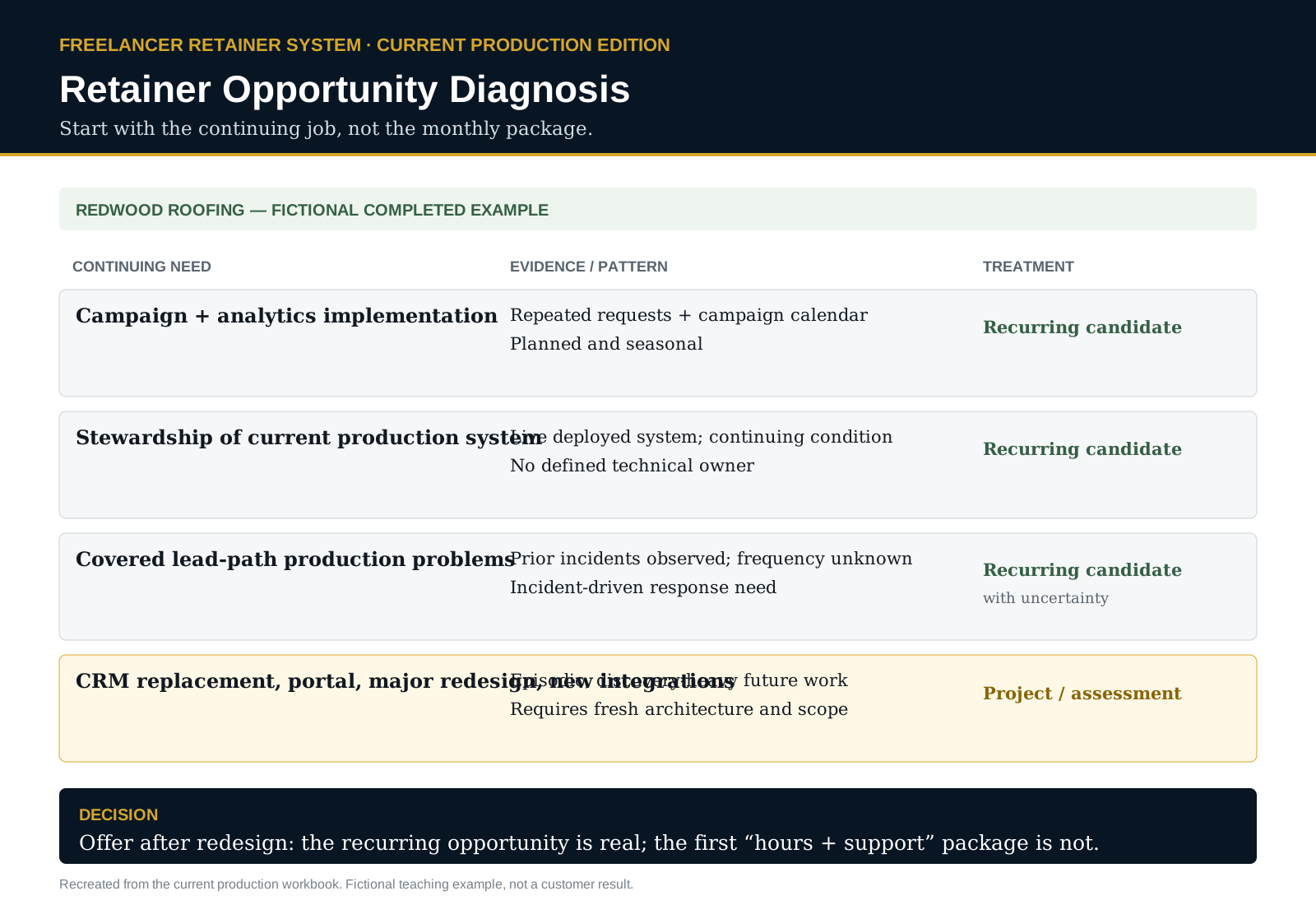
Current-edition Retainer Opportunity Diagnosis for fictional Redwood Roofing separating recurring-service candidates from project and assessment work

Worksheet 1 · Retainer Opportunity Diagnosis

The system starts before pricing. Redwood has real continuing demand, but CRM replacement, a customer portal, major redesigns, and unfamiliar integrations still behave like projects. The diagnosis preserves that distinction instead of forcing every future request into the monthly package.

Open full-size preview
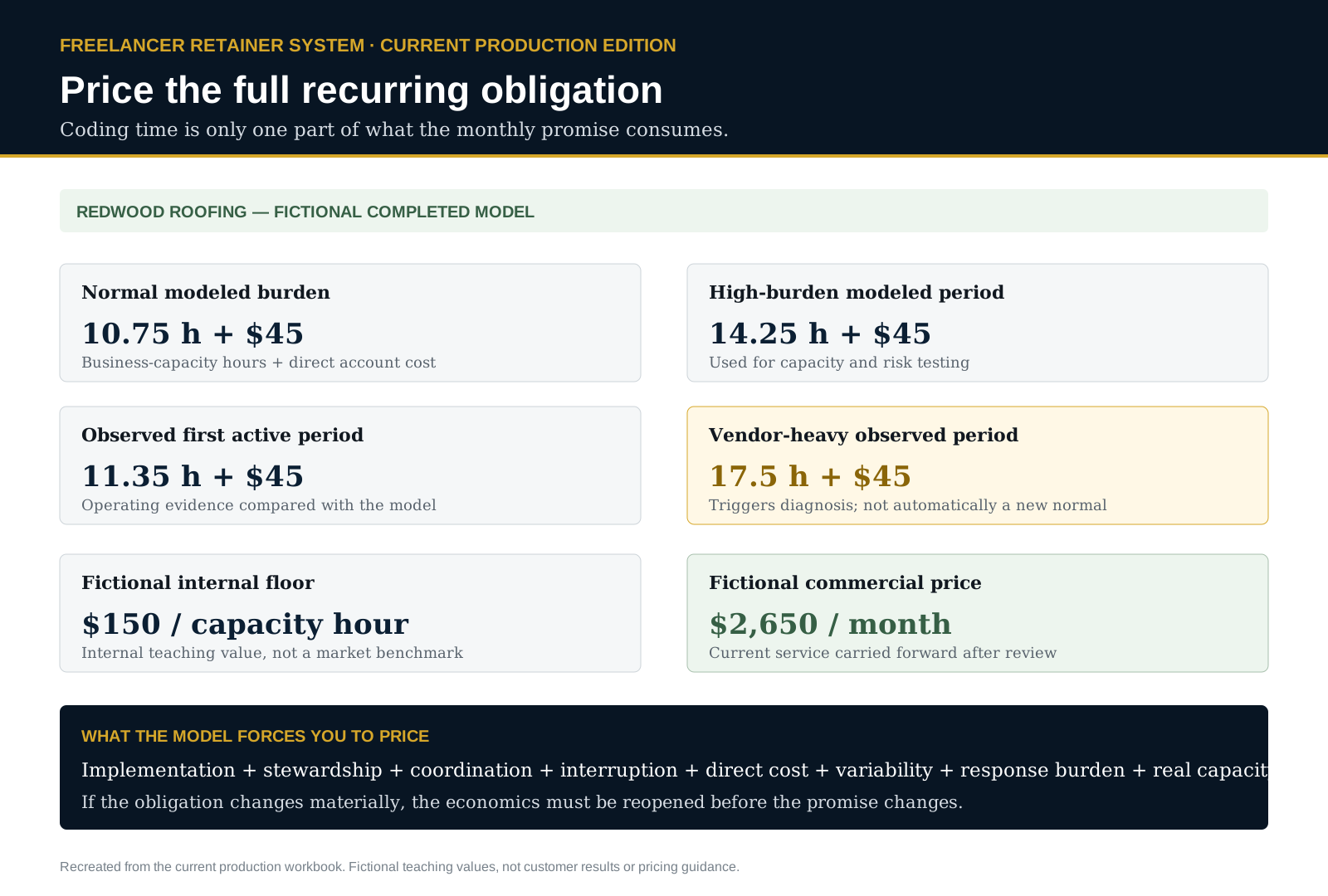
Current-edition fictional Redwood Roofing economics model showing normal and high-burden recurring load, direct account cost, observed periods, internal floor, and commercial price

Worksheet 4 · Retainer Economics Record

See what the monthly service really costs before you quote it. The model brings delivery, coordination, interruption, response burden, direct costs, variability, and any real capacity commitment into the same decision instead of hiding them behind the visible coding hours.

Open full-size preview
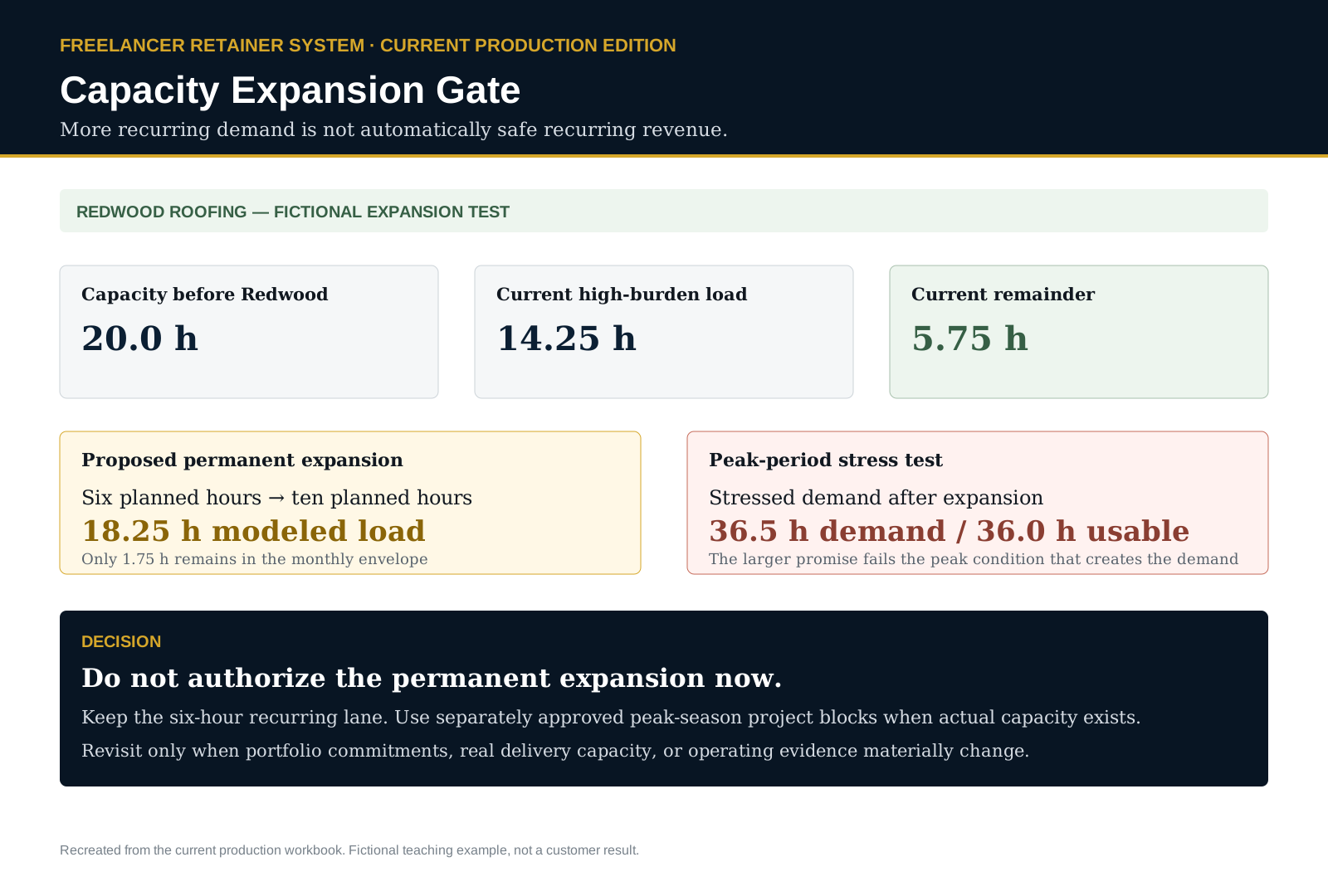
Current-edition fictional Redwood Roofing capacity gate showing why a permanent increase from six to ten planned implementation hours fails the peak-period test

Worksheet 10 · Renewal and Expansion Decision

Growth does not have to mean giving a client an ever-larger permanent claim on your calendar. The renewal record helps you decide what belongs in the monthly service and what should stay separately approved work as demand changes.

Open full-size preview

See the method work

See “ten hours plus support” become a real recurring offer.

Redwood already trusts Alex and has legitimate ongoing needs. Instead of guessing at a monthly package, the system turns that opportunity into a service with a clear client benefit, a defined promise, a price Alex understands, and boundaries that leave room for the rest of his business.

Redwood Roofing, Alex Morgan, the operating history, capacity assumptions, and dollar figures are fictional teaching examples. They demonstrate the decision method and are not customer results, market benchmarks, or a recommendation for what you should charge.

  1. 01

    Find the work worth making recurring

    Redwood still needs stewardship of its production marketing system, business-hours support and triage, and regular campaign and analytics implementation. Larger redesigns, migrations, a CRM replacement, and other discovery-heavy work still behave like projects.

  2. 02

    Turn the need into something the client can buy

    The recurring service becomes a support-led hybrid: ongoing stewardship, defined response and triage, and up to six hours of approved ready campaign and analytics implementation per service period.

  3. 03

    Keep the promise understandable

    Redwood does not buy unlimited development, a bank of prepaid hours, reserved capacity, or automatic coverage of new systems. The client knows what the monthly relationship is for and where a new project begins.

  4. 04

    Price the whole relationship, not six coding hours

    Alex models the expected delivery, coordination, response burden, direct costs, variability, and capacity effects before the fictional $2,650 monthly price is treated as commercially usable.

  5. 05

    Protect room for other work

    The capacity test checks the recurring commitment against projects, peak periods, leave, and stressed weeks so one good client does not quietly become the business’s entire calendar.

  6. 06

    Let the relationship grow without losing control

    When Redwood later wants more implementation, Alex can preserve the core recurring service and route legitimate peak work through separately approved project blocks when capacity exists instead of automatically expanding the monthly promise.

The result is a client who has a dependable way to keep getting the right ongoing help and a freelancer who has recurring revenue with enough structure to keep serving that client without rebuilding the rules every month.

The complete system

Build the retainer in the same order you will have to operate it.

Each stage solves one practical problem that would otherwise surface later as a pricing dispute, scope question, scheduling conflict, client expectation, or renewal decision. You move from post-project opportunity to a service you can sell, run, and revise without guessing.

  1. 01Find the continuing client need that is strong enough to support recurring service
  2. 02Turn that need into a specific monthly service instead of a generic block of hours
  3. 03Define what the client can request, what you will own, and where separate project work begins
  4. 04Price the full recurring obligation rather than only the visible implementation time
  5. 05Protect enough calendar capacity to keep the promise without crowding out the rest of the business
  6. 06Present the finished service to the client in clear business language
  7. 07Baseline the systems, access, ownership, dependencies, and unknowns before responsibility begins
  8. 08Run the month with a repeatable plan, request process, operating record, and client report
  9. 09Diagnose quiet months, overloaded months, emergencies, payment issues, and boundary pressure before reacting
  10. 10Renew, resize, restructure, move work back to projects, or exit based on what the relationship actually became

What you'll build

Leave with a retainer you can actually sell and run.

  • →A clear decision about which client work is worth turning into recurring revenue and which work should remain project-based
  • →A defined monthly service that tells the client what they are buying, what you are responsible for, what they can request, and where the boundary sits
  • →A pricing and capacity model that shows what the recurring promise really costs your business before you quote or expand it
  • →A buyer-facing retainer recommendation that translates the internal design into a service the client can understand and decide on
  • →An onboarding and baseline record that gives the recurring relationship a known starting point instead of inheriting hidden assumptions
  • →A repeatable monthly operating record that keeps delivery, requests, burden, client dependencies, and useful outcomes visible
  • →A renewal and Retainer Operating Specification that tells you what continues, what changes, what returns to project work, and what ends

Product depth

168

guide pages

Ten chapters take the recurring-service opportunity from post-project demand through design, sale, operation, and renewal.

138

workbook pages

Ten matched implementation records help you build the service around one real client relationship instead of reading passively.

10

connected decisions

Each chapter resolves one part of the retainer that would otherwise have to be improvised later under client pressure.

10

matched workbook records

The workbook carries your decisions forward until they become one usable Retainer Operating Specification.

A strong fit when

  • →You have current or former clients with legitimate technical needs that continue after the original project
  • →You are already providing ongoing help through messages, favors, ad hoc invoices, or a loose monthly arrangement and want a healthier commercial structure
  • →You want more recurring revenue while keeping project-shaped work separately scoped and paid
  • →You need to price ongoing responsibility from the full burden, not only the visible coding time
  • →You want monthly clients to make revenue more repeatable without giving one client control of your future capacity

Use another system when

  • ×You are trying to invent a retainer for a client who has no useful continuing need simply because monthly revenue sounds attractive
  • ×You want three canned retainer packages, a universal market-rate price sheet, or one pricing formula that works for every client
  • ×You want to promise unlimited changes, 24/7 access, guaranteed resolution, or dedicated availability without deliberately designing and pricing those obligations
  • ×You need a full general sales system, contract drafting service, tax advice, employment-classification advice, or enterprise 24/7 support operating model

This guide is included in a larger system

Need the rest of this stage working with it?

Recurring revenue starts before the project ends. The Freelancer Sales System connects qualification, closing, and continuing client value instead of treating the retainer as an isolated add-on.

Developer Sales PlaybookDeveloper Proposal & Closing KitFreelancer Retainer System · You’re here

Sales & retention

Freelancer Sales System

Separately

$237

Bundle

$179.00

You save

$58 · 24%

Questions before you buy

Make sure a continuing commercial job actually exists.

Freelancer Retainer System

Build continuity around a responsibility the client has a reason to keep buying.

Diagnose the continuing need, define the recurring obligation, price the full burden, protect capacity, operate from clear rules, and renew, resize, restructure, or end the relationship when the evidence changes.

You receive
168-page implementation guide + 138-page companion workbook
Delivery
Digital delivery through Lemon Squeezy after checkout.